
Emerald Ash Borer Treatment in Washington: Everything You Need to Know
The emerald ash borer (EAB) is an invasive beetle that has caused significant damage to ash tree populations across the United States. First detected in the Midwest in the early 2000s, it has steadily spread westward. In 2022, it was confirmed in Oregon, and experts agree it’s only a matter of time before it appears in Washington.
Across the country, EAB infestations have already led to the loss of millions of ash trees. At Thomas J. Tree & Garden Care, we’re closely monitoring the situation and helping property owners take early action to protect their trees before it’s too late. While the insect cannot be completely stopped once it takes hold in an area, early action and treatment can help slow the damage and protect ash trees for as long as possible.
This blog post will explore what the emerald ash borer beetle is, what the best emerald ash borer treatment options are, and how to prevent future infestations.
What Is the Emerald Ash Borer Beetle?
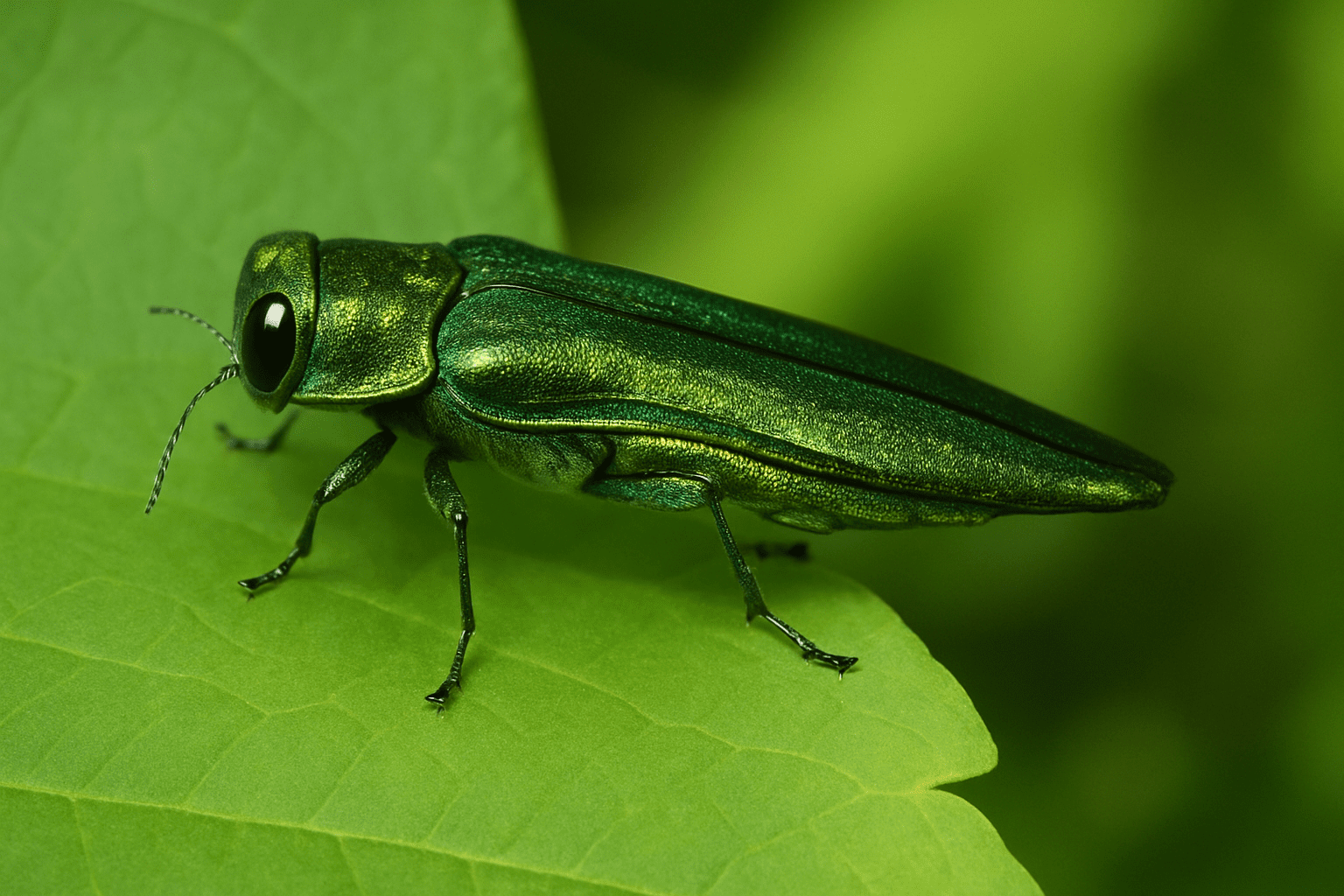
The emerald ash borer beetle is a small, metallic green insect that may not look threatening at first glance. Adults are only about half an inch long, but the real damage comes from their larvae.
After hatching, EAB larvae tunnel beneath the bark and feed on the tree’s vascular tissue, the system responsible for carrying water and nutrients. This hidden damage essentially cuts off the tree’s lifeline. Even healthy ash trees can die within just 2 to 4 years of infestation.
Why Emerald Ash Borer Damage Is So Severe
Unlike surface pests that nibble at leaves or branches, emerald ash borer beetles attack from the inside. This often causes the damage to go unnoticed until the tree is already in serious decline. Below is an explanation of how the damage typically progresses.
Emerald Ash Borer Damage Progression
- Canopy dieback typically begins at the top of the tree and gradually means downward.
- Small, D-shaped exit holes may appear where adult beetles have emerged from beneath the bark.
- Bark splits may reveal winding “galleries” where larvae have been feeding.
- Increased woodpecker activity can also indicate an infestation, as birds strip bark looking for larvae.
The damage is typically fatal. In the Midwest, entire city blocks of ash trees were lost within a few years of EAB’s arrival. Without intervention, the same could happen here in Washington.
The damage is typically fatal. In the Midwest, entire city blocks of ash trees were lost within a few years of EAB’s arrival. Without intervention, the same could happen here in Washington.
If you have ash trees on your property, schedule an inspection with Thomas J. Tree & Garden Care today to catch problems early and explore emerald ash borer treatment options before it’s too late.
Emerald Ash Borer Signs to Look Out for in Washington
One of the biggest challenges with the emerald ash borer beetle is that damage often starts long before you notice anything on the surface. By the time symptoms are obvious, the infestation is usually advanced. Knowing the early warning signs can help you act quickly and give your ash trees the best chance at survival through timely emerald ash borer treatment.
- Thinning leaves and dead branches in the upper canopy: This is usually the first sign of stress. The top begins to look sparse, and branches at the top of the tree may die back as the larvae cut off water and nutrient flow.
- New shoots (suckers) sprouting from the trunk or base of the tree: When an ash tree is under attack, it often tries to compensate by pushing out new growth from lower parts of the trunk or roots. These shoots are a red flag that the tree is stressed internally.
- Cracked bark exposing larval galleries: As larvae tunnel under the bark, you may see vertical cracks. Peel back the bark and you’ll often find distinctive S-shaped galleries, the “signature” of emerald ash borer damage.
- Unusual levels of bark loss caused by woodpecker foraging: Woodpeckers feed heavily on emerald ash borer larvae. If you notice patches of lighter-colored bark where birds have been stripping the tree, it’s often a sign of infestation.
Emerald Ash Borer Treatment in Washington
Once the emerald ash borer beetle becomes established, untreated ash trees typically decline within a few years. The good news is that with early treatment, many ash trees can be saved.
The most effective EAB treatments are designed to protect trees from the inside out and involve professional applications of systemic insecticides, delivered either as trunk injections or soil drenches. These treatments protect trees from within, targeting the larvae that feed beneath the bark. Overall, early intervention is the best strategy to extend the lifespan of your trees.
Recommended Emerald Ash Borer Treatments in Washington
- Trunk Injections: Delivers insecticide directly into the tree’s vascular system, protecting it from larvae feeding beneath the bark.
- Soil Drenches or Soil Injections: Applied around the base of the tree to be absorbed by the roots and transported upward.
- Tree Planting: Choosing the right tree and planting it correctly sets the stage for healthy growth. Arborists ensure the best start by selecting suitable species and using proper techniques.
- Annual Tree Health Inspections: These inspections can catch early emerald ash borer signs like canopy dieback, bark splits, or woodpecker activity before it’s too late.
- Contact us to schedule a health inspection today.
- Tree Removal (Last Resort): In cases of severe infestation, safe removal prevents hazardous tree failure and reduces pest spread.
The Future of Ash Trees in Washington
The reality is that the emerald ash borer is a long-term concern in North America. While complete removal isn’t possible once it’s established, proactive management can slow its impact and protect valuable trees. With timely emerald ash borer treatment, such as trunk injections, soil drenches, and consistent monitoring, many high-value ash trees can be preserved for years, even in areas where EAB populations are high.
That said, the long-term outlook for ash trees across Washington and the Pacific Northwest will depend on both treatment efforts and diversification of the urban canopy. Communities that relied heavily on ash in the Midwest experienced devastating loss when EAB spread, leaving entire streets bare. To avoid repeating this mistake, arborists strongly recommend planting a diverse mix of tree species. By reducing reliance on a single tree type, landscapes become more resilient to pests and diseases in the future.
At Thomas J. Tree & Garden Care, we focus not only on saving existing ash trees through emerald ash borer treatment, but also on helping property owners plan for long-term tree health. Strategic planting, preventative care, and regular assessments ensure a healthier, more sustainable canopy.

Contact Thomas J. Tree & Garden Care for Expert Emerald Ash Borer Treatment
The emerald ash borer poses one of the greatest threats to ash trees we’ve ever faced. Early detection and professional emerald ash borer treatment are the best tools we have to protect our landscapes.
If you suspect emerald ash borers or want to safeguard your ash trees, contact Thomas J. Tree & Garden Care today. Our ISA-certified arborists can assess your trees, recommend treatment, and help you stay ahead of this invasive pest.