What Do Arborist Services Include? A Comprehensive Guide to Tree Care
Arborist services include professional tree pruning, tree removal, stump grinding, tree health assessments, emergency tree care, and specialized treatments to maintain tree health and safety. These services are provided by certified arborists who understand tree biology and use proper techniques to care for trees on both residential and commercial properties.
In this guide, we’ll walk through the core services arborists provide and when you might need them.
What Are Arborist Services?
Arborist services are specialized tree care offerings provided by trained professionals who understand tree biology, proper pruning techniques, and how to work safely around trees. Unlike general landscaping, arborist services focus specifically on maintaining the health, structure, and safety of trees.
A certified arborist has completed rigorous training and testing through the International Society of Arboriculture (ISA). This certification ensures they have current knowledge in:
- Tree species identification and their specific care requirements
- Proper pruning methods that promote healthy growth and structure
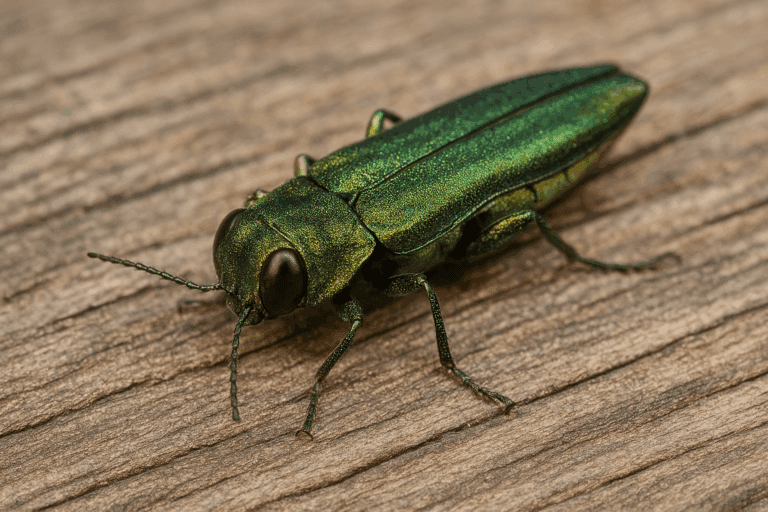
- Disease and pest identification, diagnosis, and treatment
- Tree risk assessment and hazard evaluation
- Safe tree removal techniques and proper equipment use
Arborist Services Include:
- Tree Pruning: Structural pruning, aesthetic pruning, and specialized pruning techniques
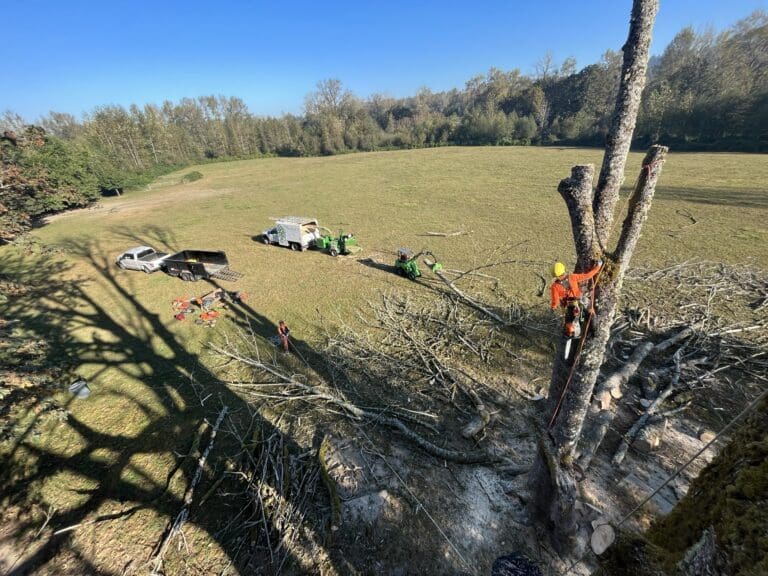
- Tree Removal: Safe removal of hazardous or unwanted trees
- Stump Grinding: Complete stump elimination below ground level
- Tree Risk Assessment: Professional evaluation of tree health and structural integrity
- Emergency Tree Service: Emergency response for urgent tree hazards
At Thomas J. Tree Care, we approach tree care from a holistic perspective, considering not just individual trees but how they interact with your entire landscape and the surrounding environment. Let’s explore each arborist service below.
Tree Pruning and Trimming Services
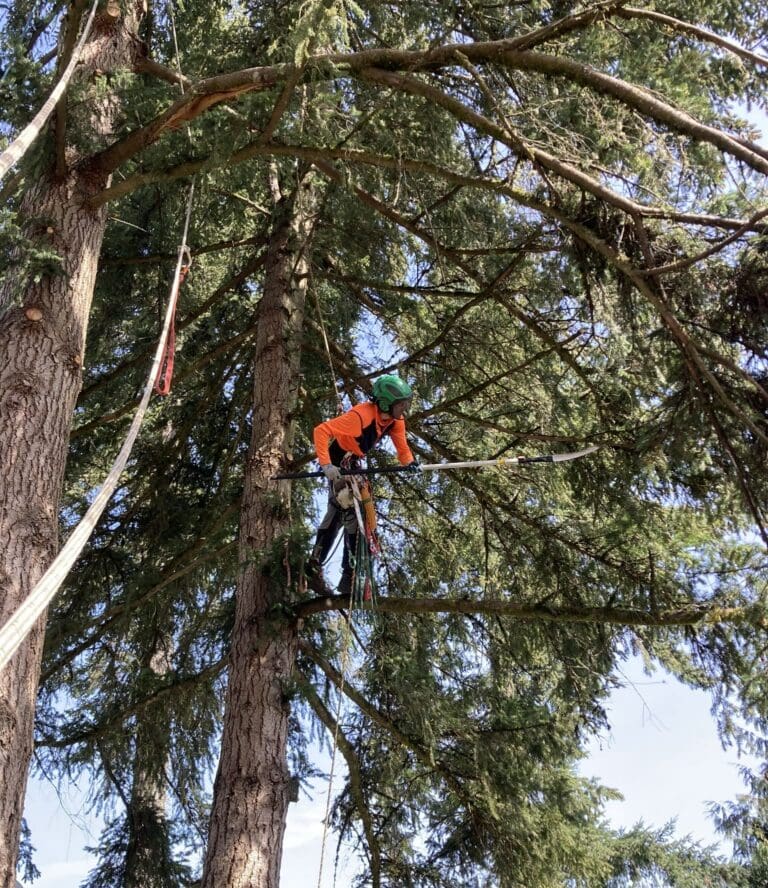
Tree pruning is one of the most important maintenance practices for keeping trees healthy, structurally sound, and safe. Proper pruning involves selectively removing and reducing branches to improve tree structure, encourage strong growth, and reduce any risk.
What Professional Tree Pruning Includes
Professional arborists use specific pruning techniques depending on the tree’s needs, your objectives, and or primary concerns:
- Structural pruning: Removing weak or poorly attached branches to develop strong tree structure and reduce the risk of future failures. This is a a selective pruning method that influences the orientation, spacing, growth rate, strength of attachment, and ultimate size of branches and stems resulting in a strong tree
- Crown thinning: Selectively removing branches to improve light penetration and airflow through the canopy
- Crown raising: Removing lower branches to provide clearance for buildings, vehicles, pedestrians, or sightlines
- Crown reduction: Reducing the overall size of the canopy while maintaining the tree’s natural form
- Deadwood removal: Removing dead, dying, or diseased branches that pose safety risks
- Vista pruning: Selectively removing branches to open specific views while preserving tree health and structural integrity.
Professional pruning follows established standards (ANSI A300) that protect tree health. Certified arborists understand how different species respond to pruning and make precise cuts that encourage proper wound closure.
When to Prune Trees
The best time to prune trees depends on species, age, the current health and condition of the tree, and your objectives or primary concerns. Most trees benefit from pruning during dormancy in late fall through early spring. However, timing varies by species, and some situations may require immediate pruning regardless of season or not have any restrictions at all.
A certified arborist can recommend the optimal pruning schedule for your specific trees based on their condition, species characteristics, and your landscape goals. Learn more in our blog post: Top 5 Benefits of Proactive Tree Pruning for Residential and Commercial Trees.
Tree Removal Services
Sometimes, tree removal becomes necessary for safety, health, or practical reasons. Professional tree removal services ensure trees are safely removed without damaging surrounding structures, utilities, or landscaping.
When Tree Removal May be Necessary
- Dead or dying trees: Trees beyond recovery that pose significant safety hazards
- Structurally compromised trees: Trees with severe decay, cracks, or root damage that make them unstable
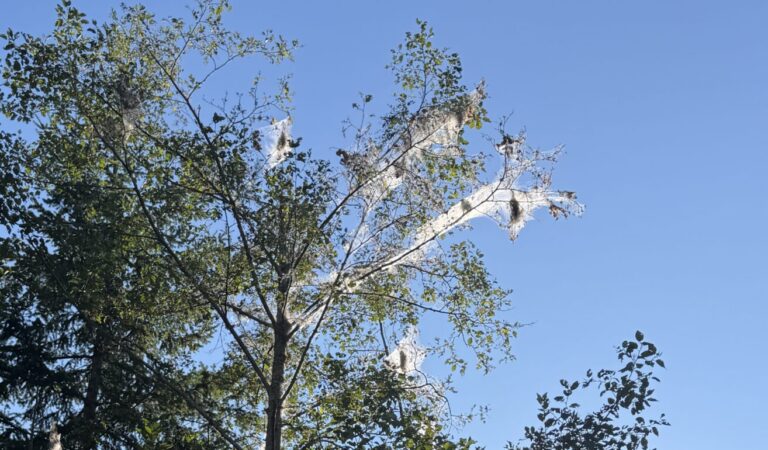
- Disease management: Infected trees that threaten the health of surrounding trees
- Construction or development: Trees located where new structures or site improvements are planned
- Storm damage: Trees severely damaged by wind, lightning, or heavy snow and ice
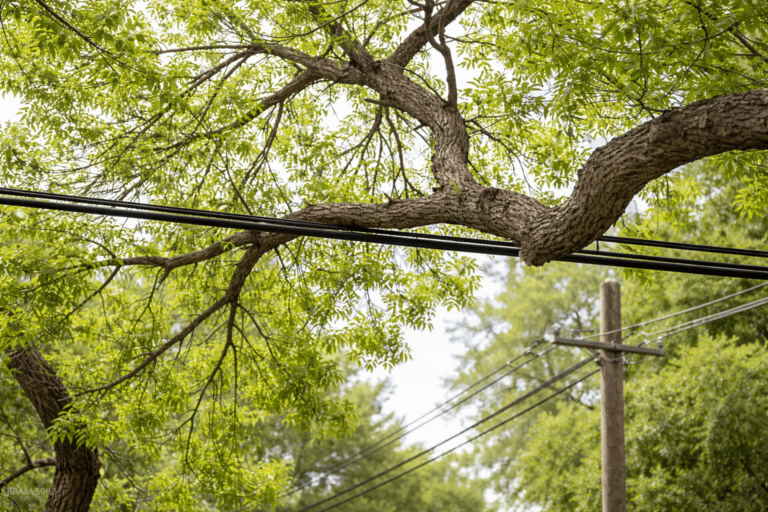
- Utility clearance: Trees growing too close to power lines or other utilities where pruning alone won’t solve the conflict.
The Professional Tree Removal Process
Safe, professional tree removal involves several key steps:
- Site assessment: Evaluating the tree, surrounding area, and potential hazards
- Safety planning: Determining the safest removal method and establishing proper work zones
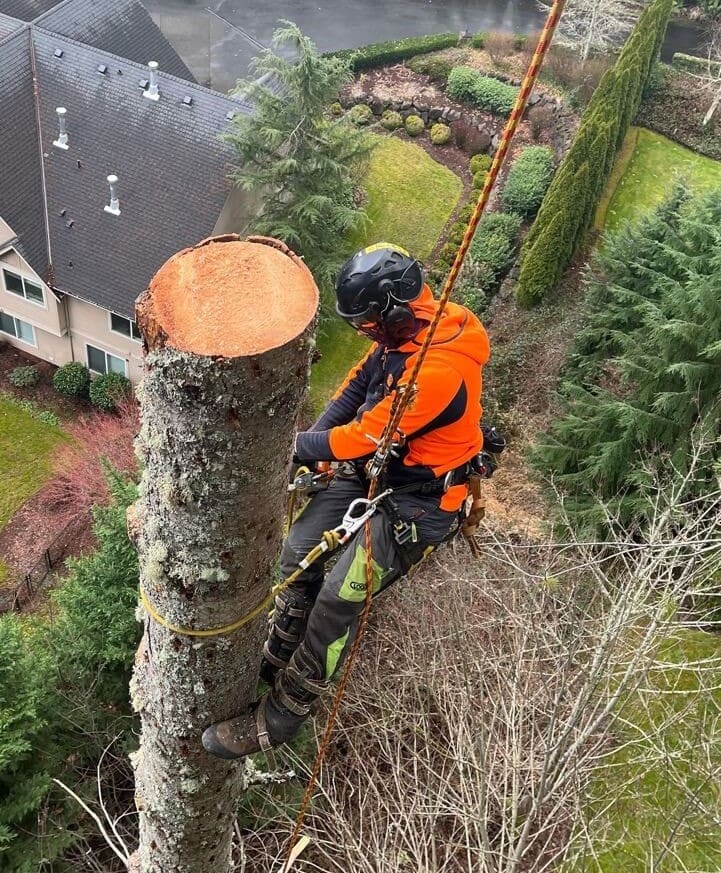
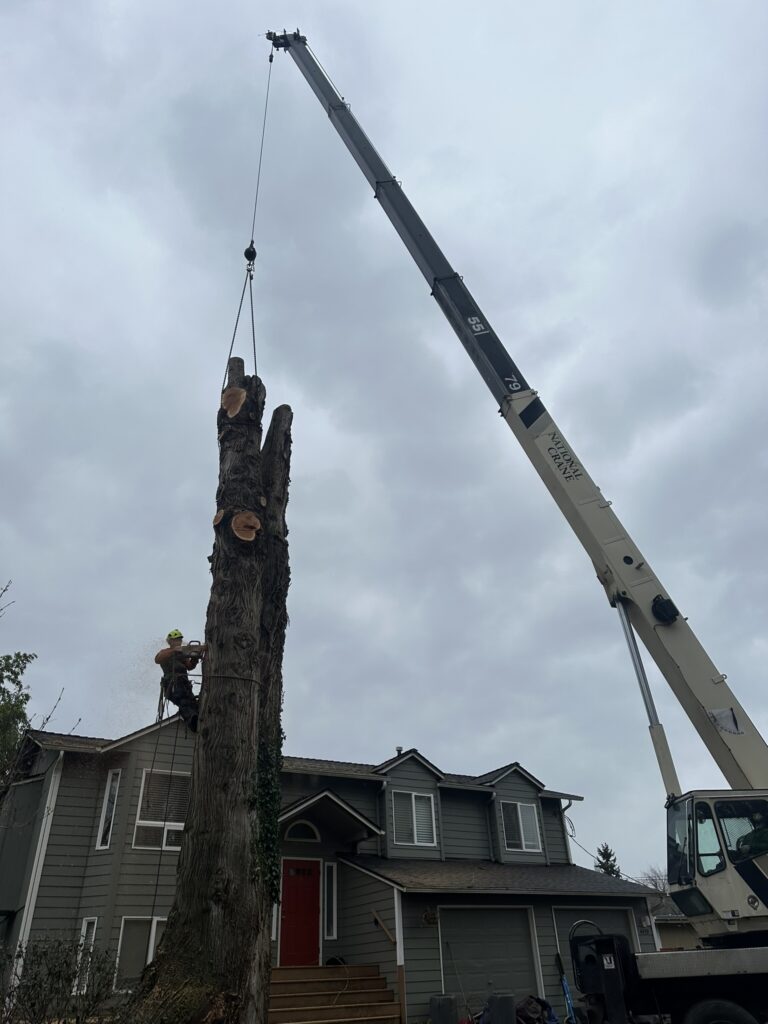
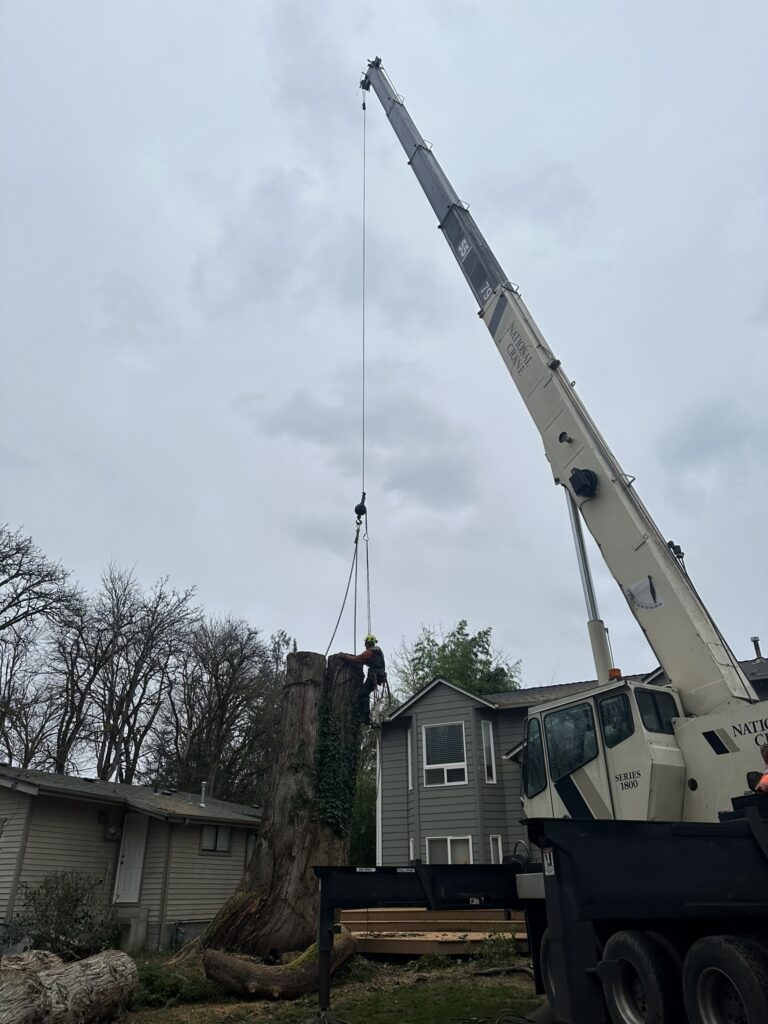
- Sectional removal: Carefully dismantling the tree in controlled sections
- Rigging and lowering: Using ropes, pulleys, and specialized equipment to control the descent of large sections
- Debris removal: Hauling away all branches, trunk sections, and completing thorough cleanup
- Stump treatment: Grinding the remaining stump or cutting it to near ground level.
Large or hazardous tree removals require specialized equipment and extensive training. Attempting tree removal without proper knowledge and equipment can result in serious injury, property damage, or worse. Contact us if you’re wondering if tree removal is necessary.
Stump Grinding and Removal
After a tree is removed, the remaining stump can pose ongoing problems. Stump grinding services eliminate stumps below ground level, allowing you to reclaim that space for other landscape uses.
Why Remove Tree Stumps
Leaving stumps in place can create several issues:
- Safety hazards: Stumps create tripping hazards and obstacles for lawn maintenance equipment
- Pest attraction: Decaying stumps attract termites, carpenter ants, other wood-boring insects
- Disease spread: Fungal diseases in stumps can spread to healthy nearby trees
- Aesthetic concerns: Stumps detract from landscape appearance and can affect property value
- Regrowth issues: Many tree species produce new shoots from stumps, creating ongoing maintenance
- Space limitations: Stumps prevent new planting, construction, or other landscape improvements in that location
Tree Health Assessment and Inspection Services
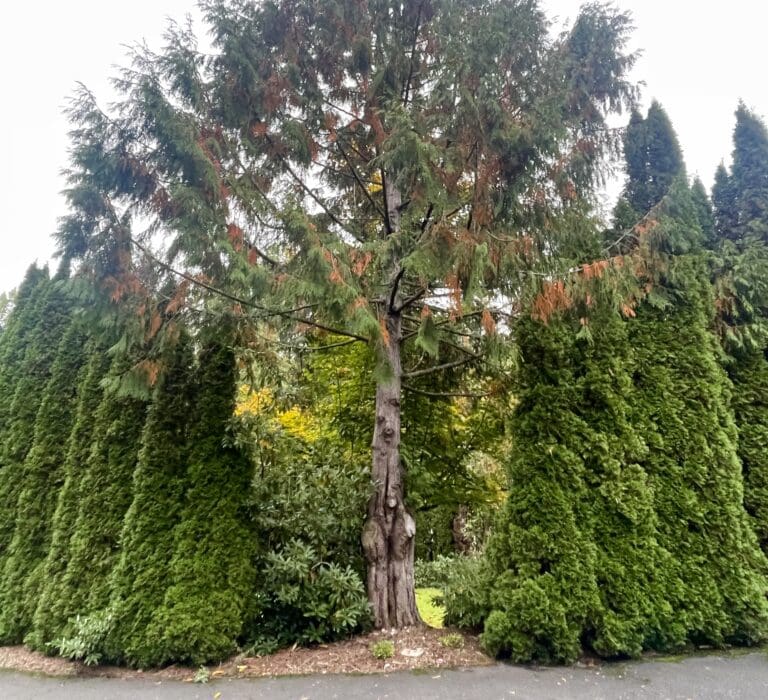
Regular tree risk assessments or Visual Tree Assessments can help identify problems before they become serious threats. Professional assessment services evaluate structural integrity, disease, pest infestations, and environmental stresses that affect tree health. These are offered in three different levels depending on the amount of information needed to guide decision making. Level 1: limited visual assessment. Level 2: Basic Assessment and Level 3: Advanced Assessment.
Potential Components of a Professional Tree Health Assessment
- Visual inspection: Comprehensive examination of the entire tree from root collar to crown
- Disease identification: Diagnosing fungal infections, bacterial diseases, or viral conditions
- Pest evaluation: Detecting insect infestations and determining appropriate treatment options
- Structural analysis: Assessing trunk integrity, branch attachments, and root system stability
- Risk rating: Evaluating the likelihood of failure, impact, and potential consequences
- Treatment recommendations: Providing specific care plans based on assessment findings
- Soil analysis: Testing soil conditions, when they may be affecting tree health
Scheduling trimming or assessments proactively allows for more precise work and better long-term outcomes than waiting until growth becomes difficult to manage.
Emergency Tree Services
Storm damage, high winds, and heavy snow can cause trees to fail suddenly, creating urgent safety hazards. Emergency tree services provide rapid response to address dangerous situations and prevent further damage.
Common Emergency Tree Situations
- Fallen trees: Trees that have completely uprooted or fallen onto structures, vehicles, or power lines
- Hanging branches: Large branches that have broken but remain partially attached and could fall at any time
- Storm damage: Trees severely damaged by wind, lightning, ice, or heavy snow accumulation
- Leaning trees: Trees suddenly leaning toward structures with visible root plate lifting
- Blocked access: Fallen trees blocking driveways, roads, or building entrances
How to Choose Professional Arborist Services
Selecting the right arborist services ensures your trees receive proper care. Here are essential qualifications to verify:
Verify Credentials and Insurance
- ISA certification: Confirm the arborist holds current certification from the International Society of Arboriculture
- Licensing and insurance: Request proof of business license, liability insurance, and workers’ compensation coverage
- Reputation: Solid local reputation with references available
Red Flags to Avoid:
- Door-to-door solicitation: Reputable arborists typically don’t solicit work door-to-door
- Cash-only payment: Professional companies accept standard payment methods and provide proper documentation
- Unusually low bids: Significantly lower prices often indicate inadequate insurance, equipment, or expertise
- Tree topping recommendations: Certified arborists almost never recommend topping, as it severely damages trees
- Pressure tactics: Be wary of urgent claims that work must be done immediately without proper & thorough assessment. It never hurts to get a second opinion.
- No written contract: Always require written agreements before work begins
Professional Arborist Services in the Greater Seattle Eastside
Thomas J. Tree Care provides comprehensive arborist services throughout the greater Seattle eastside, including North Bend, Bellevue, Kirkland, Sammamish, Issaquah, and surrounding areas. Our ISA Board Certified Master Arborist brings decades of expertise to both residential and commercial properties.
We approach tree care from a holistic perspective, understanding that effective tree management requires consideration of site characteristics, existing ecology, landscape goals, and long-term sustainability. This comprehensive approach ensures your trees receive the specialized care they need to thrive for years to come. Learn more on our mission, vision, values page.
Our Arborist Services Include:
- Tree Pruning: Structural pruning, crown thinning, and specialized pruning techniques
- Tree Removal: Safe removal of hazardous or unwanted trees
- Stump Grinding: Complete stump elimination below ground level
- Tree Risk Assessment: Professional evaluation of tree health and structural integrity
- Emergency Tree Service: 24/7 response for urgent tree hazards
- Landscape Management Plans: Holistic landscape care strategies
Contact Thomas J. Tree Care
Whether you need routine tree maintenance, emergency services, or comprehensive landscape planning, our certified arborists are here to help.
Contact us today for expert tree care from a holistic perspective. Email us at info@thomasjtreecare.com, or visit our website to request a consultation. We look forward to working with you!