Why Is My Cedar Tree Turning Brown? Understanding Cedar Flagging
Every year, as the seasons shift from Summer to Fall, we begin to get the same question from homeowners: “Why is my cedar tree turning brown?”.
The good news here is that in most cases, what you’re seeing is completely natural and normal.
At Thomas J. Tree Care, we know that this natural process, known as cedar flagging, happens every year to healthy cedar trees across the Pacific Northwest. It’s one of the ways cedars, especially Western Red Cedars, manage their energy and adapt to the changing seasons.
Let’s look at what cedar flagging really is, why it happens, and when it might be worth taking a closer look.
What Is Cedar Flagging?
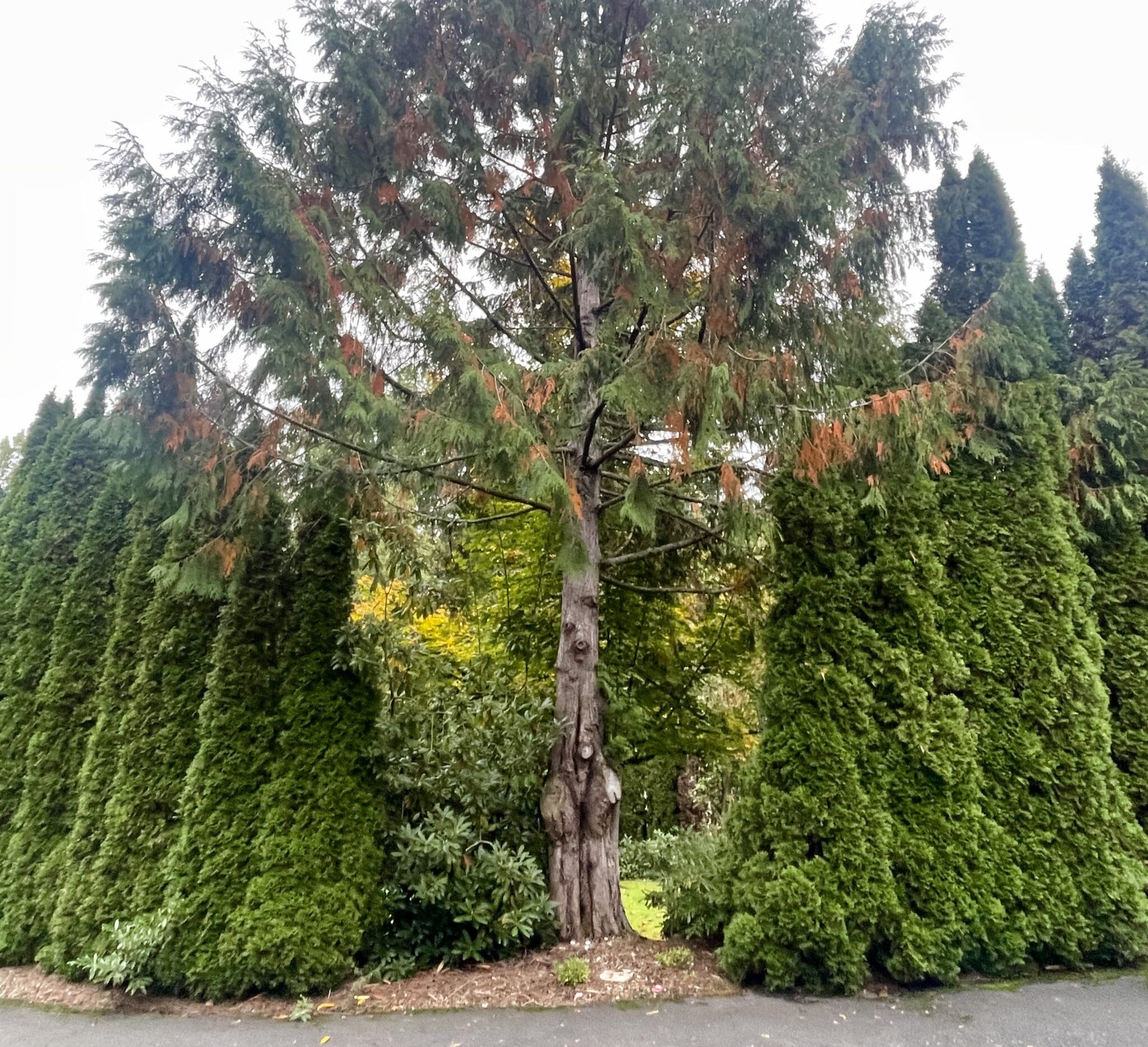
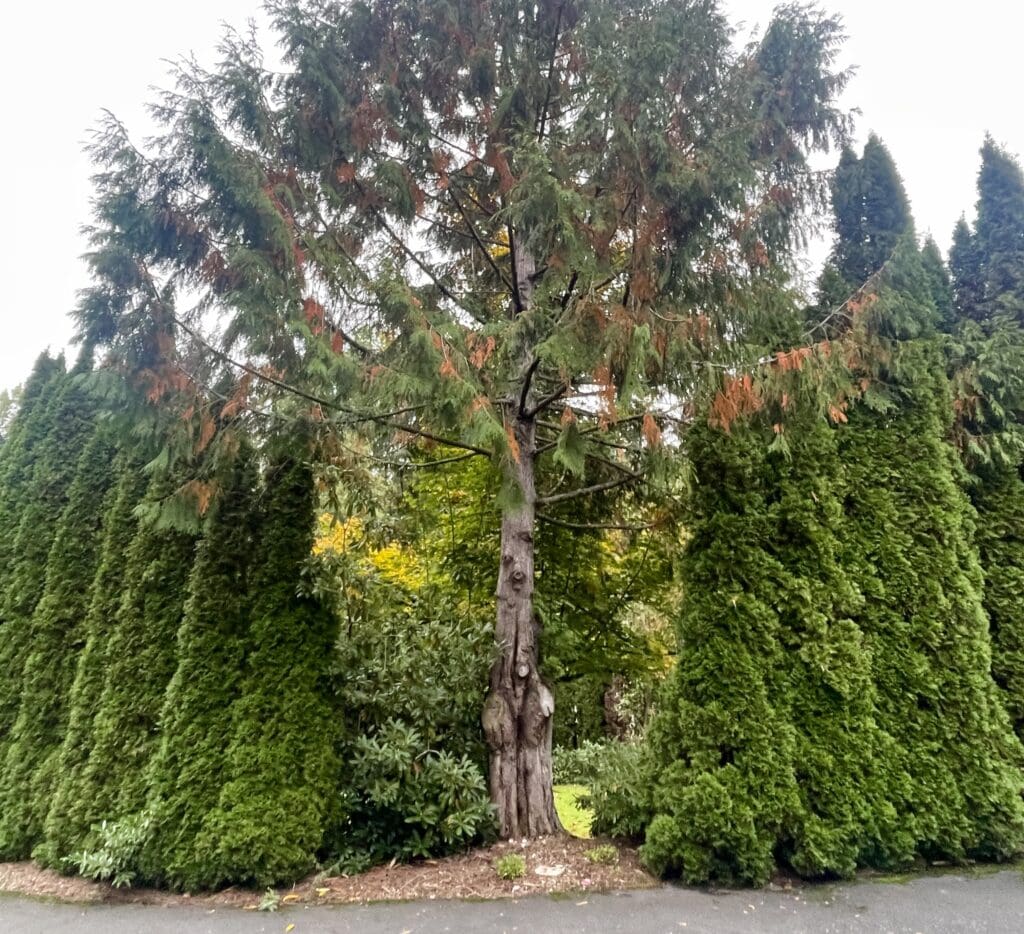
Cedar flagging is the natural shedding of older, interior needles on a cedar tree. It’s most common in late summer or early fall, and it’s especially noticeable on Western Red Cedars because of their dense, layered growth.
This shedding can be viewed as a type of resource management for the tree after the growing season. Just like other trees drop their leaves, evergreens regularly shed older needles to make room for new growth.
Typical Signs of Cedar Flagging:
- Browning concentrated on the inner branches
- Green, healthy tips at the ends of branches
- Even coloration throughout the tree’s interior, rather than isolated brown patches
Why Is My Cedar Tree Turning Brown?
While cedar flagging is normal, certain environmental conditions can cause trees to shed more foliage than usual. Here are the most common factors we see in the field:
1. Dry Summers
After a hot or dry season, cedars often shed a bit more foliage to reduce water loss. The browning can appear more dramatic, especially in mature trees with dense canopies.
2. Seasonal Shifts
Cedar trees respond to changes in light and temperature. As days shorten and rainfall patterns shift, they shed older foliage they no longer need.
3. Tree Age
Older cedars have thicker, more layered growth. That means more interior needles to shed each year, which can make flagging seem heavier compared to younger trees.
4. Environmental Variation
Differences in soil moisture, sunlight, and exposure can affect how pronounced the flagging looks from one tree to another, even within the same yard.
What Normal Cedar Flagging Looks Like
Normal cedar flagging can be mistaken for signs of disease, but once you know what to look for, the difference is easy to spot.
Signs of Normal Cedar Flagging:
- The browning is focused inside the tree, not on the outer tips.
- New growth remains green and vibrant.
- The pattern is fairly uniform, rather than concentrated on one side or a single branch.
- The tree’s overall structure looks strong and full.
Signs of Abnormal Browning
- The new, outer needles are yellowing or turning brown
- Only one section or one side of the tree shows discoloration
- The tree looks thin or sparse toward the outer edges
If you’re seeing changes in new growth or browning that spreads unevenly, that’s when it’s worth scheduling a tree risk assessment. A professional arborist can determine whether the tree is reacting to drought, soil conditions, or something more persistent.
The Life Cycle of Cedar Needles
Even though cedars are evergreens, their needles don’t stay on the tree forever. Each needle has its own lifespan, typically three to five years for a Western Red Cedar.
As new growth forms at the branch tips each year, the older needles closer to the trunk gradually age out. Over time, these older needles become shaded and less effective at photosynthesis. When the tree no longer needs them, it redirects nutrients toward the younger growth and allows the interior needles to dry out and fall.
How to Support Healthy Cedars Naturally
For most trees, flagging requires no action at all. It’s a sign your cedar is functioning exactly as it should. That said, a few good habits can help your trees stay strong year after year:
- Maintain a layer of natural mulch around the base to protect the roots and retain moisture.
- Avoid compacting the soil near the trunk or root zone.
- Water deeply during extended dry periods, especially in late summer or during heat waves.
- Give the tree space and let it shed naturally; the fallen needles help build healthy soil.
Observation is often the best care. Watch how your trees respond from season to season, and you’ll begin to recognize their natural cycles.
Thomas J. Tree Care’s Approach
At Thomas J. Tree Care, we take a practical, informed approach to tree health, one rooted in observation, science, and respect for how trees naturally grow and adapt.
We help clients understand what’s normal, what’s worth watching, and when professional attention is truly needed. If the new growth on your cedar is turning brown, that’s when a tree risk assessment can be helpful. Our team of certified arborists will evaluate soil conditions, root health, and canopy balance to ensure your trees stay strong and resilient for years to come. Contact us today if you’re concerned that what you’re seeing is abnormal.