Fall Webworms in Trees: What Those Webs Mean and What to Do
During Summer and Fall, we often start to receive the same call: “There are big silky webs on my tree, and they’re full of caterpillars. What is going on?”
The good news is that in most cases, you’re looking at fall webworms. They look alarming, but they are native to our region, and a healthy tree will usually shrug them off.
At Thomas J. Tree Care, we see fall webworms across the Pacific Northwest every year. Here’s what they are, how to tell them apart from other web-making caterpillars, whether they harm your trees, and when it’s worth calling in a professional.
What Are Fall Webworms?
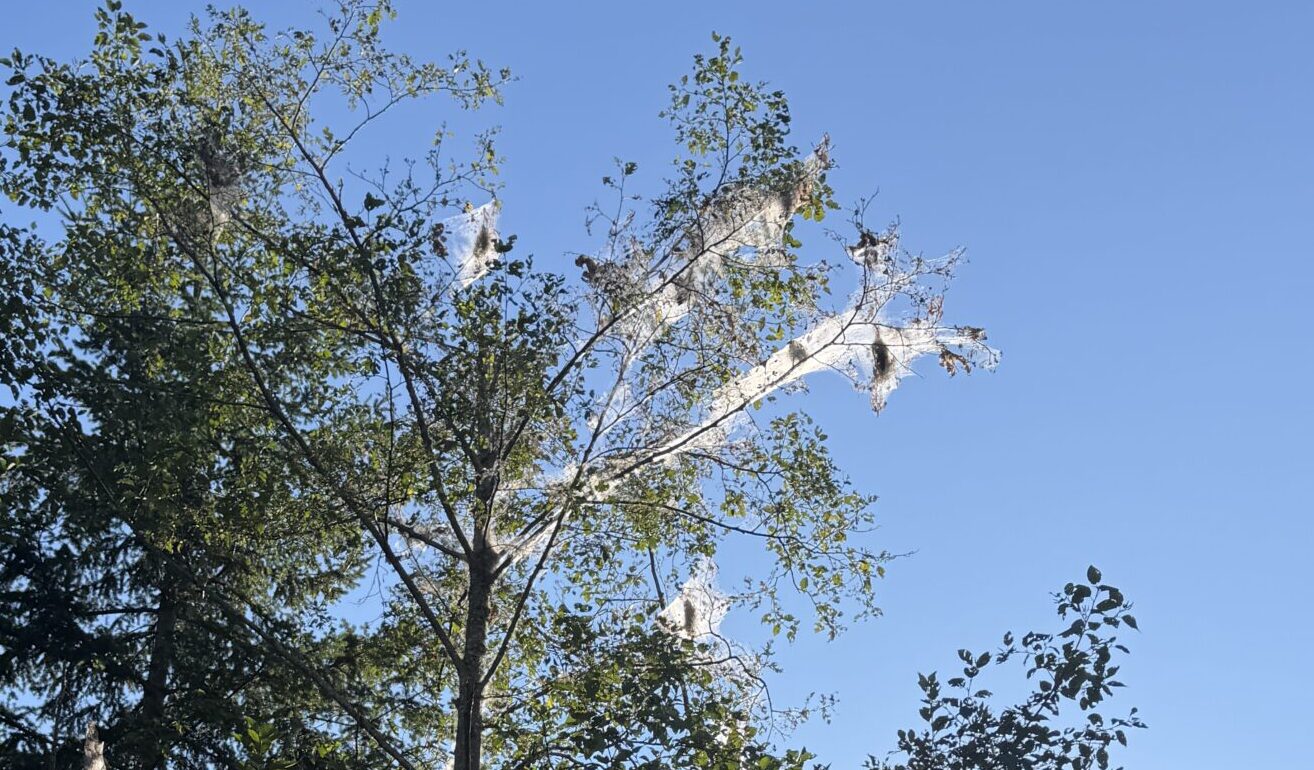
Fall webworms are caterpillars of a small white moth native to North America. In late summer and early fall, the caterpillars spin silk webs over the leaves and twigs at the ends of tree branches, and they feed together inside the web.
Here’s a quick look at their life cycle:
- Moths and Eggs: Adult moths are white and emerge in early summer. Each female lays up to several hundred eggs on the undersides of leaves.
- Caterpillars: The eggs hatch in midsummer, and the caterpillars begin building their web right away. They grow through several molts, reaching about an inch long.
- Cocoons: Once they finish feeding, the caterpillars leave the web and spin cocoons in bark crevices or in the soil, where they spend the winter.
In the Pacific Northwest, fall webworms have one generation per year.
How to Identify Fall Webworm Webs
Fall webworm webs are easy to spot once you know what to look for. Here are the main signs.
What the Webs and Caterpillars Look Like
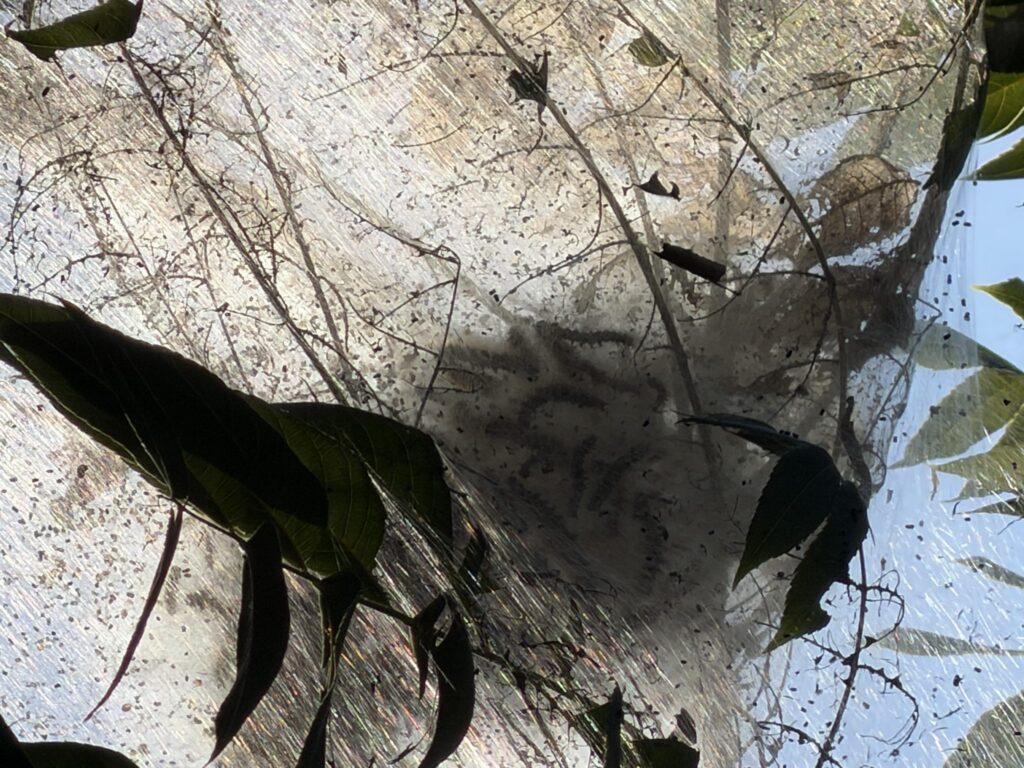
The webs are gray, silky, and found on the outer ends of branches, where they wrap around leaves and small twigs. As the caterpillars grow, they expand the web to enclose more foliage. Over time, shed skins, droppings, and dead leaves collect inside, giving the web a messy look.
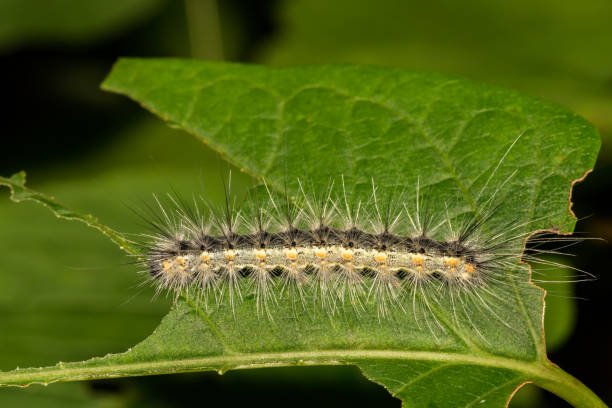
The caterpillars themselves are hairy. In the Pacific Northwest, WSU describes them as rusty tan with a dark, almost black body, though some are a lighter tan.
Fall Webworms vs. Tent Caterpillars
|
Fall Webworm |
Spring Tent Caterpillar |
|
|
When You See It |
Late Summer and Early Fall |
Spring |
|
Web Size |
Large, and it keeps expanding |
Smaller |
|
Leaves Inside the Web? |
Yes, the web encloses foliage |
No, the web doesn’t enclose foliage |
Which Trees Do They Target?
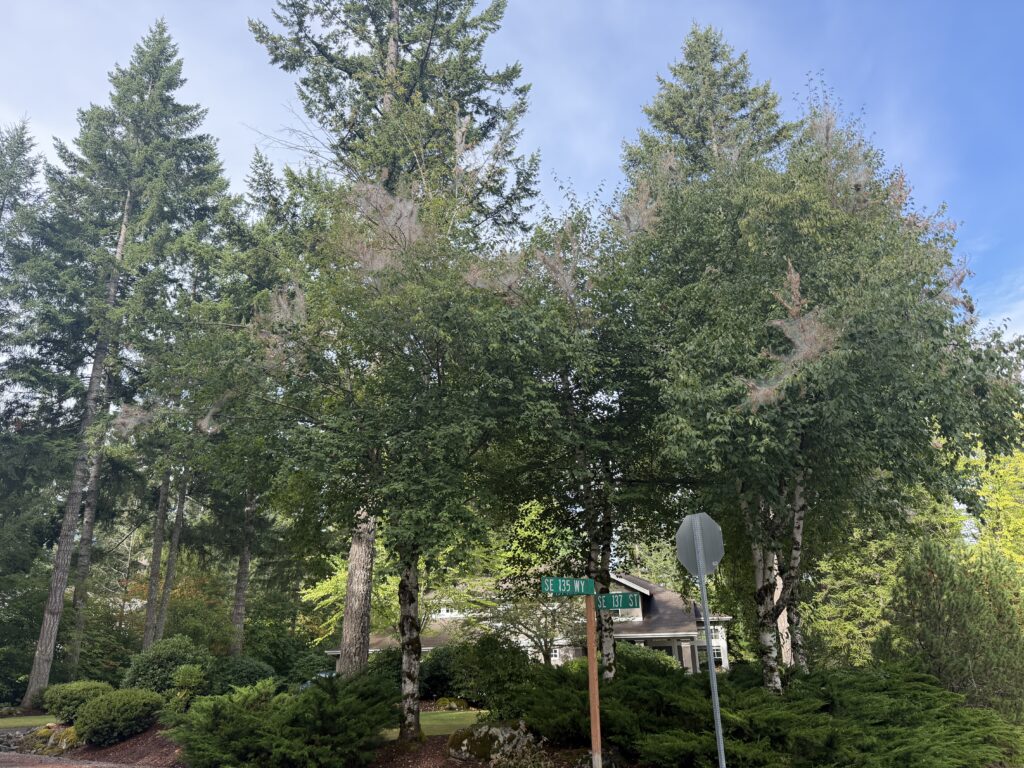
Fall webworms feed on the leaves of many deciduous shade, nut, and fruit trees. In western Washington, WSU lists alder, cottonwood, walnut, and apple among their favorites. They don’t feed on evergreens such as pines and spruces.
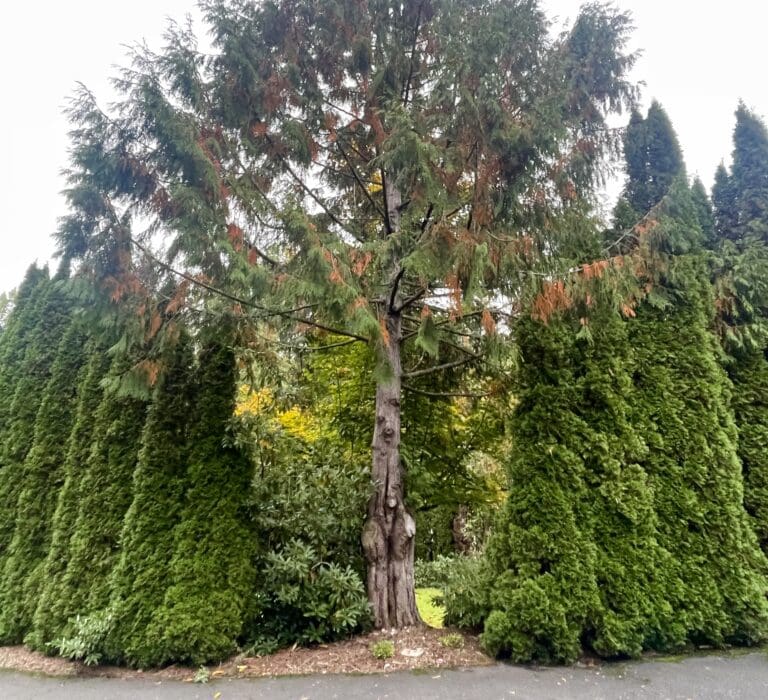
That’s useful to know if you’re looking at a brown cedar. Browning on a cedar isn’t caused by fall webworms. It’s often cedar flagging, a natural seasonal process.
Do Fall Webworms Harm Trees?
For most healthy trees, fall webworms are more of an eyesore than a threat. Here’s why:
- They Feed Late in the Season: By late summer, most of the tree’s photosynthesis is done and it’s already preparing for winter dormancy, so few energy reserves are lost.
- They Don’t Stay Long: Populations rarely last more than two to three years in the same area.
- They Have Plenty of Natural Enemies: More than 80 species of parasitic and predatory insects feed on them, which keeps their numbers in check.
The picture changes if the same tree is hit year after year, or if the tree is already stressed. Persistent infestations can eventually cause dieback of individual branches. Young trees and small fruit trees are also more vulnerable, since losing a lot of leaves is harder on a small tree.
Are Fall Webworms Poisonous?
The main thing to know is that fall webworm caterpillars are covered in long hairs, and those hairs can cause a skin rash in some people. If you’re clearing a web yourself, wear gloves and long sleeves, and wash up afterwards.
Generally speaking, fall webworm caterpillars are not harmful if touched and not a concern around pets.
How to Get Rid of Fall Webworms
For most healthy trees, you don’t need to do anything. If the webs bother you, or the tree is small, there are a few simple options. The earlier you act, while the caterpillars are still small, the less leaf damage you’ll see.
Option 1: Let Nature Handle It
Fall webworms have a long list of natural enemies, including parasitic wasps and predatory insects. In most years, these keep populations in check on their own. On a large, healthy tree, doing nothing is often the best choice.
Option 2: Prune Out Accessible Webs
If the web is on a branch you can safely reach from the ground, you can prune it out. Bag it up, or soak the web and caterpillars in a bucket of soapy water for a few days.
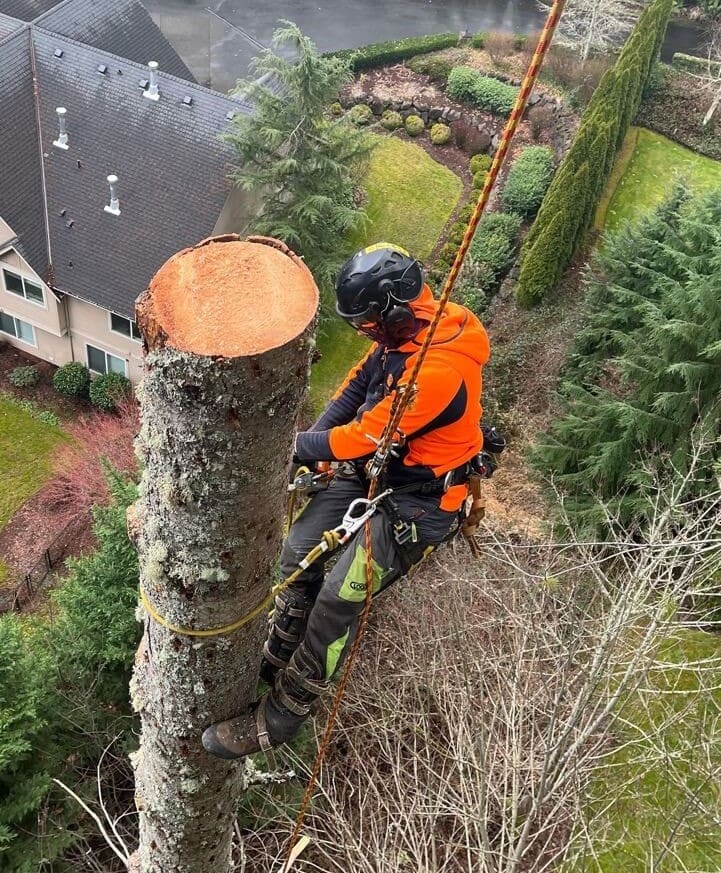
Never climb into a tree or use a pole saw near power lines to remove a web. Please always consult a professional, as that is line clearance tree trimming.
Option 3: Break the Web Open
A rake, a stick, or a strong blast from a garden hose can tear a small web apart. A WSU entomologist notes that this also opens the web up to wasps and other predators that will feed on the caterpillars.
Option 4: Bt for Young Caterpillars
Bt (Bacillus thuringiensis var. kurstaki) is a bacterial insecticide that only affects leaf-feeding caterpillars. It doesn’t harm beneficial insects or other animals. The caterpillars have to eat it, so it needs to be sprayed on the leaves around the web, and it works best on young caterpillars. That can be hard to do on a large tree. Always follow the product label.
What About Stronger Insecticides?
We generally don’t recommend them. Fall webworm damage is rarely severe enough to justify spraying, and broad insecticides can also harm the predators and parasites that keep webworms under control. WSU’s guidance is that pesticides are generally not recommended, and that homeowners shouldn’t spray trees taller than 10 feet.
Keeping Your Trees Healthy
Even though fall webworm damage is rarely serious, a healthy tree bounces back from defoliation and other stresses much more easily. A few simple habits go a long way:
- Water During Dry Periods: Deep watering in late summer helps trees stay resilient when pests and heat hit at the same time.
- Avoid Wounding the Tree: Mower and trimmer damage to the trunk makes it harder for the tree to cope with other stresses.
- Protect the Soil: Avoid compacting the ground within the dripline, the area under the outer reach of the branches.
- Mulch the Base: A layer of natural mulch protects the roots and holds moisture. For more on this, see our guide to winter tree care.
When to Call a Certified Arborist
Most fall webworm infestations don’t need professional help. It’s worth calling an arborist if:
- The webs are high in a large tree and you can’t safely reach them
- The same tree has been infested year after year
- You notice branch dieback, thinning, or other signs the tree is struggling
- The affected tree is young, newly planted, or a fruit tree you’re counting on for a harvest
- You’re not sure whether you’re dealing with fall webworms or something else
A certified arborist can tell you whether the webs are just a seasonal nuisance or a sign your tree needs more attention. A tree risk assessment is a good place to start if you’re worried about a tree’s overall health, and proper tree pruning can help remove heavily affected branches safely. Not sure why hiring a certified arborist matters? Let’s dig into that!
Thomas J. Tree Care’s Approach
At Thomas J. Tree Care, we take a practical, informed approach to tree health, one rooted in observation, science, and respect for how trees naturally grow and adapt.
We help homeowners understand what’s normal, what’s worth watching, and when professional attention is truly needed. If you’re not sure whether the webs on your tree are fall webworms or a sign of something more serious, our team of certified arborists can take a look and give you honest advice. We serve homeowners and businesses across King County and the surrounding area.
Contact us today to schedule a visit.